Tuesday, October 14, 2008

Pupfish Population Increasing


Photo by Stephen Osmon, Los Angeles Times


We wrote about the incredibly rare Death Valley pupfish last year, after we saw them in their tiny Devils Hole habitat in Nevada. Now the New York Times and the Los Angeles Times report that the fall count of the pupfish shows an increase in population. The pupfish, an isolated species whose numbers were down as low as 38 in 2006, now number 126. They numbered close to 500 as recently as the mid-1990s.

The counts are done in spring and fall; spring counts are typically much smaller than fall because the pupfish have a greater die off in the winter months. They are counted in the shallow rock shelf where the majority of them feed and spawn, and by divers who reach the 100 foot depths where others may swim. They are counted twice a day, and the numbers averaged for a total population figure

Biologists are not sure why the species has dwindled so precipitously since then, but suspect that a lack of nutrients is to blame. To remedy the situation, they took the highly unusual step of developing a specialized, high-nutrient fish food similar to food used to feed minnow at a New Mexico hatchery.

"It was not done lightly," Bob Williams, Nevada field supervisor for the U.S. Fish and Wildlife Service, told the L.A. Times. "When you start to artificially augment a wild population, it is a sign the species is really in trouble."

Click here for more information on the Amargosa Valley pupfish station or the pupfish home page at http://www.fws.gov/Nevada/protected_species/fish/species/dhp/dhp.html.

Sunday, September 21, 2008

Imperial Beach

Located very close to the California-Mexican border, Imperial Beach is the southwestern-most city in the United States, a small, unpretentious beach town not nearly as affluent or well-known as Coronado. Which is probably how they like it.


Located close to the beach is the Tijuana Estuary Visitor Center, where there are miles of trails and abundant bird-watching.

We had the reserve to ourselves, except for a birder who had already spent the entire morning waiting to see something. He became very excited by the appearance of a rare bird, which he pointed out to us (seen below). We have to admit, rather sheepishly, that we are not birders and therefore don't know how momentous viewing this bird was. We also can't say what it was (although it may have been a bar-tailed godwit). If anyone can positively identify this bird, please let us know.


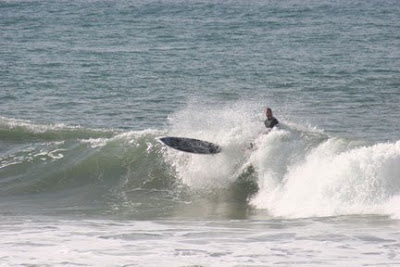
Walking across to the uncrowded beach, we came across one of those scenes that defines the archetype of Southern California--surfers. One had brought his black Lab, who was ecstatic to get out in the water, rush back to shore, and repeat the process. He may have had a better time than his master, who wiped out.


Wednesday, September 3, 2008

Card of the Week: Ashford Mill, Death Valley


It might sound odd, but Death Valley is one of the most beautiful places on Earth, and one of our favorite spots to visit. Despite its funereal name, there is plenty of life in this extreme environment. Even a little bit of rain can spur a bloom. Here is an abandoned mine now full of the wildflower desert gold.

This is one of our most popular cards. It is available for $2 each, with free shipping. A pack of 10 costs $16. To order, please contact us at info@mozaicstudio.com.

Monday, August 25, 2008

Card of the Week: Leaning Tree


Here's a new feature for our blog: Card of the Week, where we showcase some of our best cards. This one, "Leaning Tree," was shot at Maroon Bells, Aspen, Colorado.

Mozaic Studio cards are printed on recycled paper, and available for $2 each, with free shipping. Packs of 10 are only $16. To order, please contact us at info@mozaicstudio.com.

Sunday, August 24, 2008

PickensPlan


Visit PickensPlan

View my page on PickensPlan


We've been all though the U.S., mostly on road trips through national parks, vast deserts, along Route 66, in sequoia forests, deep gorges, across wild rivers, and in parts in-between. This is a beautiful and amazing country full of ecological treasures. To diminish any of it is to lower our quality of life here.

At the same time, we must come to terms with our gross and ruinous reliance on oil--particularly foreign oil--as the fuel that keeps us moving. America must reduce, if not eliminate, this reliance. We have joined other proponents of the PickensPlan in urging the increase of wind power as a source of energy. It's clean, it's environmentally friendly, and it doesn't require despoiling anything to get it.

You can be cynical and protest that T. Boone Pickens, the plan's chief architect, stands to profit financially from any increase in wind power, and that his main motivation is the bottom line in his own fortune. Personally, we would rather hand our fuel dollar over to another American than to some hostile petro-billionaire who despises us. You can also dismiss wind power as a micro-solution that won't replace anything. We would argue that the long journey to fuel independence must start somewhere, however modest.

Check out the PickensPlan. Better yet, join. Since American leaders can only suggest offshore drilling as the answer to the current fuel crisis--oh, right, let's not change anything about what we use, let's just change where we can get more of it--take matters into your own hands and join a movement.